Seasons, heat and cold desert nights
When to go to the desert
Spring and autumn are the easy answer. The more useful one depends on how you cope with heat, cold nights and crowds, and on the dates you already have.
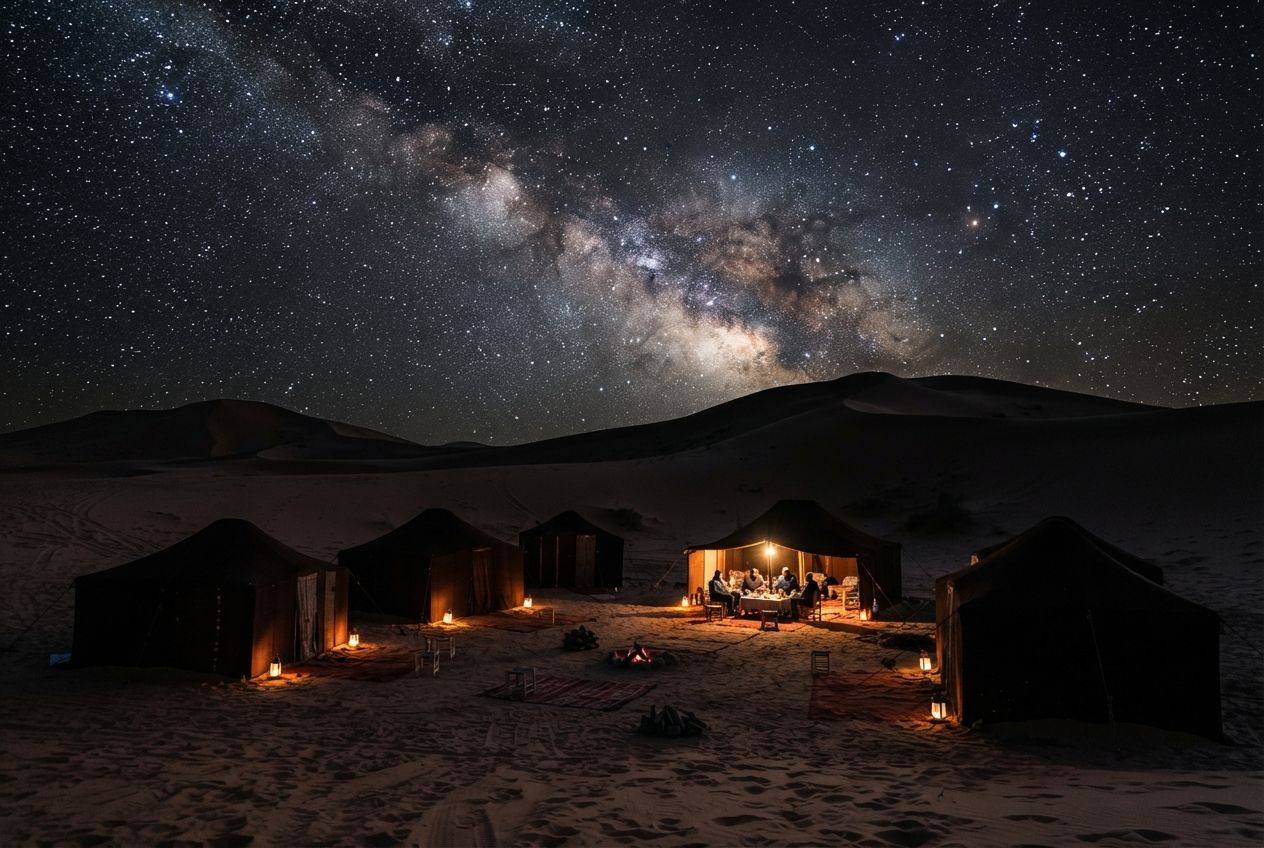
AI-generated illustration
- Tours from
- €109 per personread on 21 October 2026
Short answer
The best time to visit the Moroccan desert is March to May or late September to November, when days are warm and nights cool rather than cold. Summer works if you accept highs around 40 °C and plan around the midday heat. Winter days are pleasant, but nights in a desert camp drop close to freezing, so pack warm layers.
Book by the days you have
- See this tour on Civitatis
Merzouga, 3 days
Tours from €109 per person
- See this tour on Civitatis
Zagora, 2 days
Tours from €68 per person
- See this tour on Civitatis
Agafay desert night
Tours from €55 per person
Price per person read on Civitatis on 21 October 2026. How we pick and order tours
How to read the climate table
The table below uses long-term averages from town weather stations: Marrakech, Ouarzazate, Zagora and, for Merzouga, Errachidia, the nearest station with long records. Camps out in the dunes are usually colder at night than these figures.
Averages hide the swings. A heatwave or a cold snap can push a given week well away from the table, so check a forecast in the days before you travel. If you're still deciding where to go, start with Agafay, Zagora or Merzouga.
Spring: March to May
Spring is the most comfortable season for most people. In April, Merzouga averages 26 °C by day and 13 °C at night, and the Atlas peaks usually still carry snow.
It's also often the windiest time in the south. Wind can lift sand for a day or more, hiding the dunes and making camp evenings gritty. Bring sunglasses and a scarf you can wrap around your face.
Easter brings more visitors and higher demand for camps and drivers. Book earlier if your dates fall around it.
Summer: June to August
Summer is hot everywhere south of the Atlas. In July, Zagora averages 45 °C and Merzouga 40 °C, and nights stay warm at around 26 °C. Even Marrakech averages 38 °C.
A desert trip is still possible. Tours start early, the hottest hours are spent in the shade, and camel rides happen at sunrise and sunset. Ask whether your tent has a fan or air conditioning, and drink more than you think you need.
If the heat puts you off, Essaouira on the coast and the Atlas valleys make cooler day trips.
Autumn: September to November
Autumn is spring's mirror, usually with less wind. By October, Merzouga is down to around 27 °C by day and 14 °C at night; in November, nights fall to about 8 °C.
Early September can still be very hot. Later in the season, storms are possible in the mountains, and heavy rain can flood valleys such as Ourika and damage roads, so check the weather before a mountain day.
Winter: December to February
Winter days are clear and mild, with low, warm light for photos. Nights are the catch: in January Merzouga averages a low of 2 °C in town, and a camp in the dunes can be colder still. Ask what heating and blankets the camp provides, and use our packing checklist.
Snow can close or slow the Tizi n'Tichka pass, the road every desert tour from Marrakech takes. Delays can last hours, sometimes longer, so build a spare day into your plans and don't book a flight for the evening you return.
Christmas and New Year are among the busiest weeks for desert camps. Prices go up and popular camps fill early.
Ramadan and the busy weeks
Ramadan follows the Islamic lunar calendar and moves about 11 days earlier each year, so check the dates for your trip. Tours and camps keep running. Some cafés and restaurants close during the day, and life shifts towards the evening.
It's a fine time to travel if you're flexible. Be discreet about eating and drinking in public during daylight, especially outside Marrakech.
Month by month
Average temperatures
Long-term monthly averages, rounded. Desert camps are usually a few degrees colder at night than the nearest town.
| Month | MarrakechHigh / Low | OuarzazateHigh / Low | ZagoraHigh / Low | Merzouga area (Errachidia)High / Low |
|---|---|---|---|---|
| Jan | 19 °C 6 °C | 17 °C 2 °C | 20 °C 4 °C | 16 °C 2 °C |
| Feb | 21 °C 8 °C | 19 °C 5 °C | 22 °C 6 °C | 18 °C 5 °C |
| Mar | 24 °C 10 °C | 23 °C 8 °C | 26 °C 10 °C | 22 °C 9 °C |
| Apr | 26 °C 12 °C | 27 °C 12 °C | 31 °C 13 °C | 26 °C 13 °C |
| May | 29 °C 15 °C | 31 °C 16 °C | 36 °C 17 °C | 30 °C 17 °C |
| Jun | 34 °C 18 °C | 36 °C 20 °C | 41 °C 21 °C | 35 °C 22 °C |
| Jul | 38 °C 21 °C | 39 °C 23 °C | 45 °C 25 °C | 40 °C 26 °C |
| Aug | 37 °C 21 °C | 38 °C 22 °C | 44 °C 25 °C | 38 °C 25 °C |
| Sep | 33 °C 19 °C | 33 °C 18 °C | 37 °C 20 °C | 33 °C 20 °C |
| Oct | 29 °C 16 °C | 28 °C 13 °C | 31 °C 15 °C | 27 °C 14 °C |
| Nov | 23 °C 11 °C | 22 °C 7 °C | 25 °C 11 °C | 21 °C 8 °C |
| Dec | 20 °C 7 °C | 18 °C 3 °C | 20 °C 6 °C | 17 °C 4 °C |
Check the forecast for your dates: a single cold front or heatwave moves these numbers a lot.
Sources: NOAA climate normals 1991 to 2020 for Marrakech, Ouarzazate and Errachidia (read on 12 October 2026 from the weather tables of their Wikipedia articles). Zagora comes from Climate-data.org, which is modelled, so read it as approximate. Merzouga has no long-record station, so Errachidia, the nearest, stands in for it.
Questions people ask
What is the best month to visit the Moroccan desert?
April and October are the safest choices: warm days, cool nights and no extreme heat. March, May and November work well too, with chillier nights at either end.
Is it too hot to visit the desert in summer?
It's very hot but not impossible. Merzouga averages 40 °C in July, so tours plan the camel ride and walks for early morning and evening. If you struggle with heat, choose spring or autumn.
How cold does the Moroccan desert get at night?
In winter, very cold. Errachidia, the nearest station to Merzouga, averages 2 °C in January, and camps in the dunes are usually colder than town. Bring a warm layer for the evening even in spring and autumn.
When are sandstorms most likely in Morocco?
Strong, sandy winds are most common in spring, though they can happen in other seasons. They usually pass within a day or two, but they can hide the dunes and cut visibility on the road.
Can I visit the desert during Ramadan?
Yes. Tours and camps run as usual, and meals are provided for guests. Check the dates for your year, since Ramadan moves earlier each year, and be discreet about eating in public during daylight.
Is the road over the Atlas open in winter?
Usually, but snow can close or slow the Tizi n'Tichka pass for hours or longer. Check conditions the day before and keep some slack in your schedule.
Reviewed: